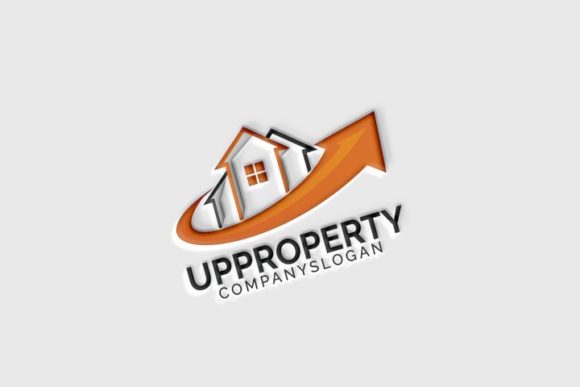
Up Property Logo: A Comprehensive Evaluation for Real Estate Branding
In the competitive landscape of real estate, visual identity serves as a critical differentiator. Among the various design assets available to professionals and agencies, the Up Property Logo has emerged as a notable option for those seeking a modern, scalable brand mark. This evaluation explores the specifications, technical capabilities, and practical applications of this asset, helping stakeholders determine if it aligns with their specific branding requirements.
Understanding the Up Property Logo Asset
The Up Property Logo is designed as a premium vector graphic intended for commercial use in the property sector. Unlike raster-based images that rely on pixels and can degrade when resized, this logo is constructed using mathematical paths. This fundamental difference ensures that the design remains crisp and sharp regardless of the scale at which it is displayed. Whether applied to a small business card or a massive billboard, the integrity of the lines and shapes is preserved without any loss of quality.
The asset is marketed as "fully editable," a feature that distinguishes it from static image files. In a professional context, this means that the individual components of the logo—such as the icon, the typography, and the layout—are separated into distinct layers. Designers can modify colors, adjust spacing, or rearrange elements to better suit a specific campaign or corporate guideline without needing to recreate the entire design from scratch. This flexibility is particularly valuable for companies that may need to adapt their visual identity across different markets or product lines.
Technical Specifications and File Formats
A robust digital asset must be compatible with a wide range of software and output mediums. The Up Property Logo package addresses this through a comprehensive suite of file formats, catering to both print and digital workflows.
- Vector Formats (AI and EPS): The inclusion of Adobe Illustrator (CS version) and Encapsulated PostScript (EPS) files is essential for high-quality printing. These formats support CMYK color mode, which is the standard for offset and digital printing. Using these files ensures that the colors printed on brochures, signage, and stationery match the intended brand palette accurately.
- Raster Formats (PNG): For web and social media usage, the package provides PNG files on a transparent background. This allows the logo to be overlaid on various backgrounds without unsightly white boxes. The resolution is optimized for screen display while maintaining clarity.
- Color Modes: The availability of both CMYK and RGB versions covers the full spectrum of media needs. RGB is utilized for screens, while CMYK is reserved for physical materials, preventing color shifts during the production process.
Additionally, the asset includes font information. Typography plays a significant role in brand recognition. By providing details about the fonts used, the purchase allows clients to ensure consistency. If a designer needs to replicate the text elsewhere, knowing the exact typeface prevents the need to manually guess or substitute generic fonts that might alter the brand's tone.
Evaluating Benefits and Tradeoffs
When considering the acquisition of a logo template like the Up Property Logo, it is important to weigh the advantages against potential limitations. The primary benefit lies in cost-efficiency and speed. Developing a custom logo from scratch involves a lengthy process of research, sketching, iteration, and finalization, often requiring a significant budget. Pre-made premium assets offer an immediate solution that maintains a high standard of design aesthetics.
The ability to edit the design is a double-edged sword. While it offers convenience, it also requires a baseline level of design proficiency. Users who are not familiar with vector editing software like Adobe Illustrator may find the "fully editable" aspect challenging to utilize effectively. Without the necessary skills, the user might struggle to separate layers or change colors, potentially rendering the advanced features inaccessible. In such cases, hiring a freelance designer to make the initial adjustments might be a necessary step.
Another consideration is the exclusivity of the design. Premium logos are typically sold to multiple users unless an exclusive license is purchased separately. This means that other real estate agents or agencies could potentially use a very similar or identical logo. For a large firm building a unique market presence, this lack of uniqueness could be a drawback. However, for smaller startups or independent agents looking to establish a professional look quickly, the tradeoff is often acceptable.
Situations Where This Asset Is a Strong Fit
The Up Property Logo is particularly well-suited for specific scenarios within the real estate industry. It is an ideal choice for new real estate agencies that require a polished visual identity but have limited budgets for custom design services. The professional appearance provided by the vector format helps these new entrants compete with established firms immediately.
It is also highly effective for marketing campaigns that require rapid deployment. When launching a new listing or a seasonal promotion, time is often of the essence. Having access to editable files in multiple formats allows marketing teams to create branded materials instantly. The transparent PNG files facilitate quick integration into email signatures, website headers, and social media posts.
Furthermore, this asset fits the needs of businesses that operate across diverse media channels. Because the package includes both print-ready (CMYK) and web-ready (RGB) files, a company can maintain a consistent look from a physical open house flyer to a mobile-friendly Instagram story without worrying about resolution issues or color mismatches.
Alternatives and Considerations
While the Up Property Logo offers significant utility, it may not be the perfect solution for every situation. Companies with a highly specialized niche or a complex brand story might find pre-made templates too generic. If a business aims to build a long-term, unique brand equity that cannot be replicated, investing in a bespoke design process led by a professional agency is often the superior path. Custom designs ensure that no other competitor possesses the same visual mark, offering a level of distinctiveness that templates cannot provide.
Additionally, organizations with strict internal design guidelines may find the constraints of a pre-set logo limiting. If a company already has a defined color palette and typography system that conflicts with the default settings of the Up Property Logo, the effort required to rebrand the template might outweigh the benefits of purchasing it. In such cases, starting with a blank canvas or a more flexible framework might be more efficient.
Practical Decision-Making Insights
To determine if this asset aligns with your goals, consider the following factors. First, assess your technical capability. Do you or your team have access to vector editing software? If yes, the Up Property Logo offers excellent value due to its editability. If no, you must factor in the cost of external help to customize the design.
Second, evaluate the importance of exclusivity. If your strategy relies on being the only agent in your area with a specific look, a custom design is mandatory. If your priority is simply to project professionalism and competence quickly, a premium template is a viable alternative.
Finally, review the file specifications carefully. Ensure that the CS version of the AI file is compatible with your current software suite. Older versions of Adobe Creative Suite may not open newer files, so verifying compatibility before purchase prevents workflow disruptions. The inclusion of font information should also be cross-referenced with your existing library to avoid licensing issues or substitution errors.
In conclusion, the Up Property Logo represents a functional and versatile tool for real estate professionals. Its vector nature guarantees quality, while its multi-format support simplifies the transition between digital and print media. By understanding its strengths regarding editability and its limitations regarding exclusivity, buyers can make an informed decision that supports their broader branding objectives. For those seeking a balance between cost, quality, and speed, this asset stands as a compelling option in the marketplace.